
Weight Loss
Decoding Nutrition Labels: What Indian Brands Don't Want You to Know
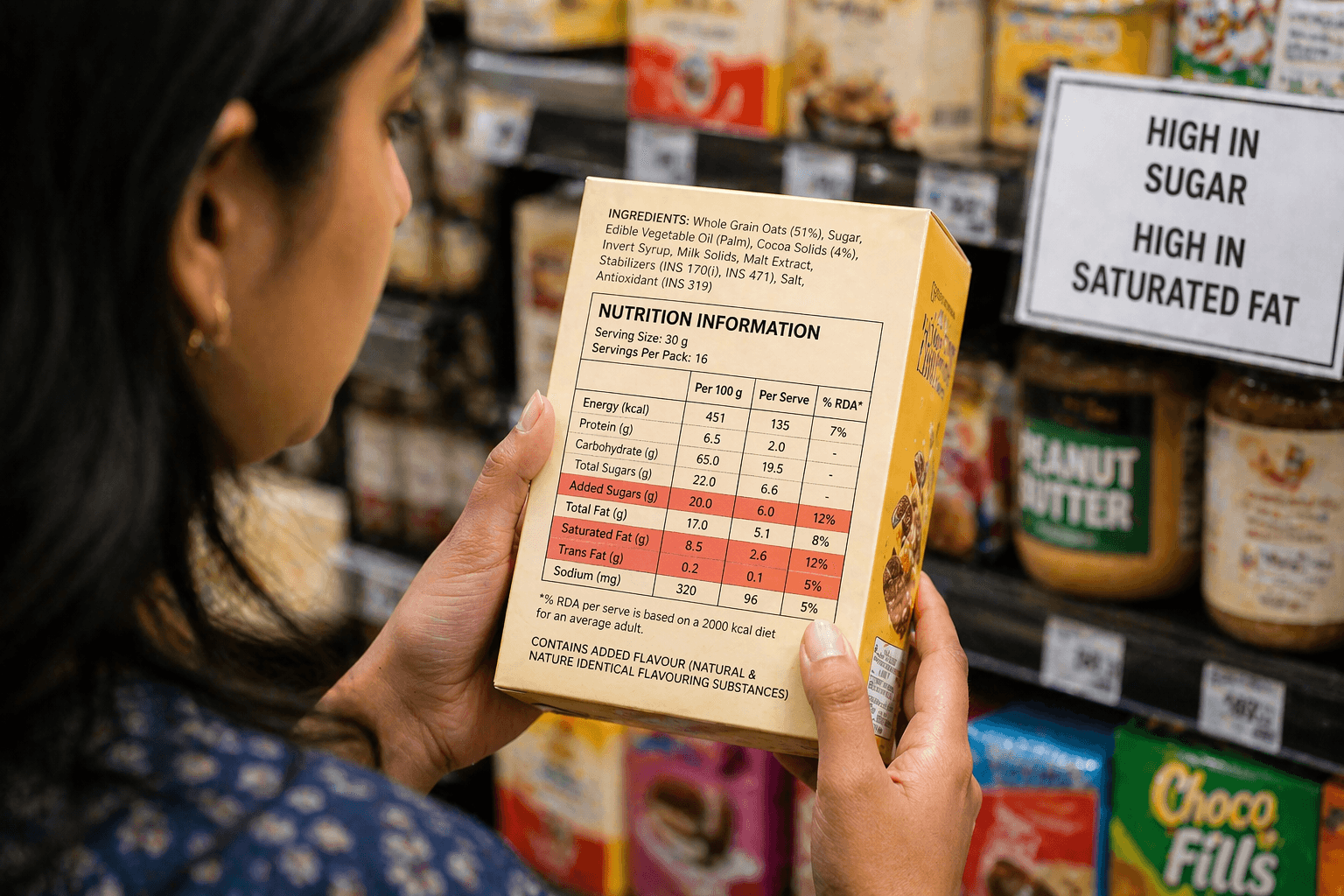
Walk through any supermarket and you will see shelves full of foods shouting promises: baked, multigrain, low fat, sugar free, protein rich, high fiber, natural, fit, lite, and immunity boosting. Packaging is built to create trust before you ever examine the product. That is why label reading matters so much. It is one of the simplest skills that can immediately improve grocery choices without forcing perfection.
The first thing to check is serving size. Many products appear reasonable only because the nutrition panel is written for a quantity that few people actually eat. Two biscuits, thirty grams of granola, half a packet of chips, or a tiny spoon of spread may technically be the serving, but real-life intake is usually much higher. If you do not adjust mentally for how much you actually consume, calories and sugar can look deceptively small.
The second and more important check is the ingredient list. Ingredients are listed in descending order of quantity. If refined flour, sugar, liquid glucose, maltodextrin, starch, palm oil, or syrup appear near the top, the product is telling you what it really is. That matters more than front-label claims. A cereal may say multigrain, but if sugar and refined grains dominate the ingredient list, the marketing is doing more work than the food quality.
Sugar deserves special attention because it hides behind many names. Dextrose, fructose, invert syrup, malt extract, jaggery solids, honey solids, glucose solids, and fruit concentrate can all serve the same purpose. The body still experiences them as concentrated sweetness. Similarly, low-fat products may look healthier but often compensate with extra sugar, starch, or additives to keep taste and texture appealing.
Protein claims can also be misleading. A bar, biscuit, or cereal may contain a little extra protein, but that does not automatically make it a good everyday food. You still have to ask whether the ingredient list is sensible and whether that item truly supports the role you want it to play in your diet. Sometimes a simple homemade snack like curd with fruit, chana chaat, or peanuts with buttermilk is more satisfying and less processed than a heavily marketed packaged health food.
The goal of label reading is not to become fearful. It is to become less impressionable. Take twenty extra seconds in the store. Check serving size, ingredient order, sugar aliases, and the balance of protein and fiber. Once you learn that pattern, packaging loses a lot of its power. You stop buying with hope and start buying with clarity. That one shift can improve your daily diet more than many expensive wellness trends.
Want to read more client stories?