
Lifestyle
Smart Snacking for PCOS, Weight Loss, and Busy Office Days
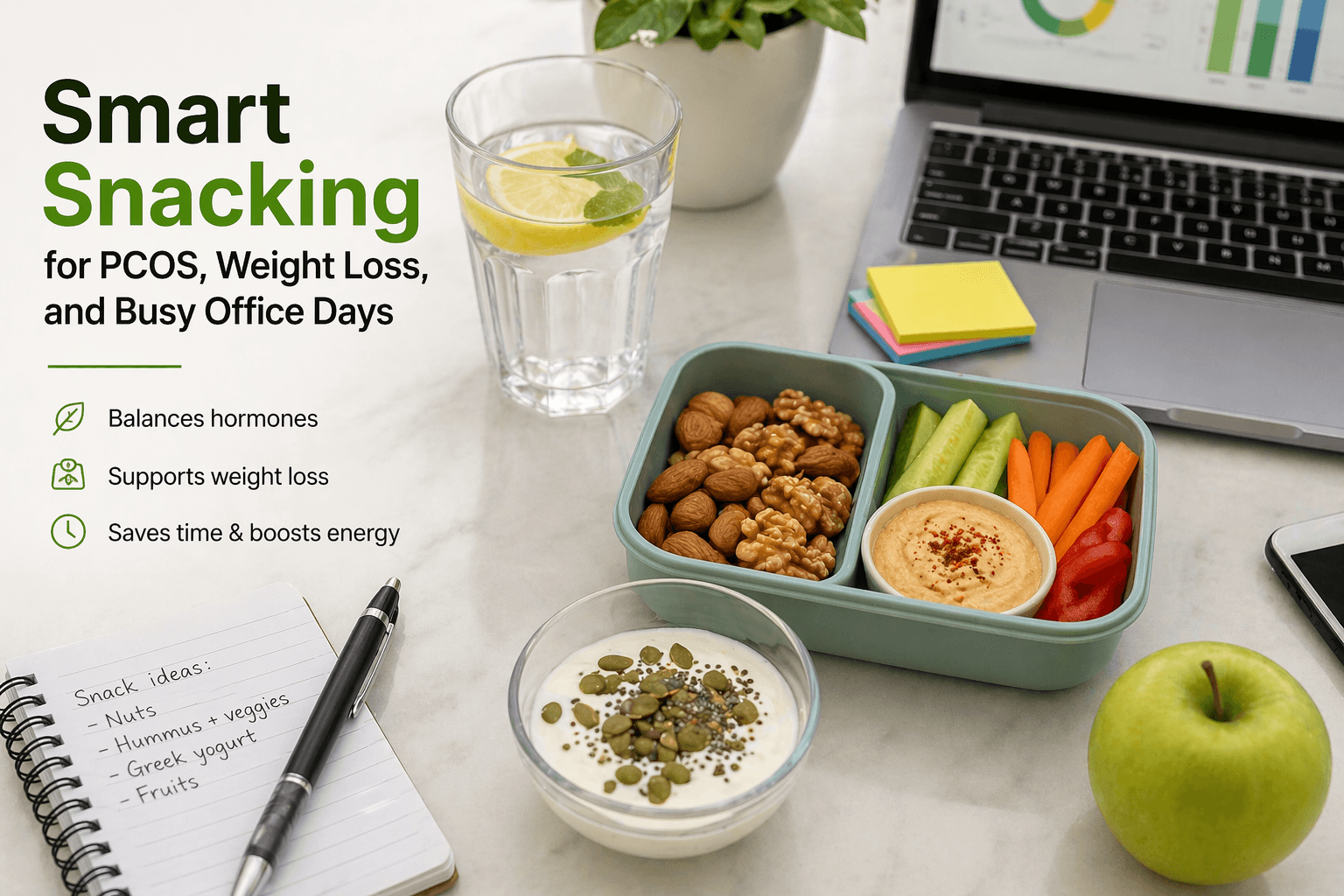
Snacking is one of the most misunderstood parts of nutrition. Some people believe all snacks are unnecessary and that eating between meals is automatically unhealthy. Others depend on packaged snack foods marketed as healthy but built largely on sugar, starch, and branding. The truth sits in the middle. Snacking can be useful when it is planned with purpose and linked to your real day instead of random appetite swings.
A good snack should solve a problem. Maybe there is a long gap between lunch and dinner. Maybe you work out in the evening. Maybe your morning meetings push lunch later than planned. Maybe PCOS-related blood sugar swings make you vulnerable to overeating when you get home. In these situations, a structured snack can protect the next meal from becoming chaotic.
The biggest snack mistake is choosing foods that look light but provide almost no staying power. Tea with biscuits, diet namkeen, sweet granola bars, fruit juice, or flavored yogurt can create temporary relief without true satiety. The body remains unsatisfied, and the evening hunger feels even more aggressive. A useful snack usually contains some combination of protein, fiber, or healthy fat.
This does not need to be fancy. Roasted chana, peanuts with fruit, curd with seeds, paneer cubes, boiled eggs, makhana roasted in ghee and spices, sprouts chaat, hummus with vegetables, or a small homemade besan chilla can all work beautifully. The exact snack depends on your preferences, schedule, and portability needs. What matters is that it reduces chaos instead of adding to it.
People with PCOS often do particularly well with snacks that blunt blood sugar fluctuations. That means prioritizing protein and fiber instead of sweet quick-fix foods. Office-goers benefit from keeping emergency options visible and ready. If the only food available at 5 PM is the vending machine, you are not choosing freely. You are reacting to what is easiest. Good snack planning is really environment planning.
It also helps to stop turning every snack into a reward event. A snack does not need to feel like a cheat or a celebration. It is simply a bridge between meals when the day demands one. When you view it that way, decisions become calmer and more strategic.
If snacking currently feels like a weak point, do not start by banning it. Start by upgrading it. Pick two reliable snack options for home and two for work. Repeat them for a week, notice hunger and energy changes, and then adjust. Better snacking is rarely about finding the perfect superfood. It is about making the next good choice easier than the impulsive one.
Want to read more client stories?