
Weight Loss
Why Crash Diets Keep Failing Indian Women Over 30
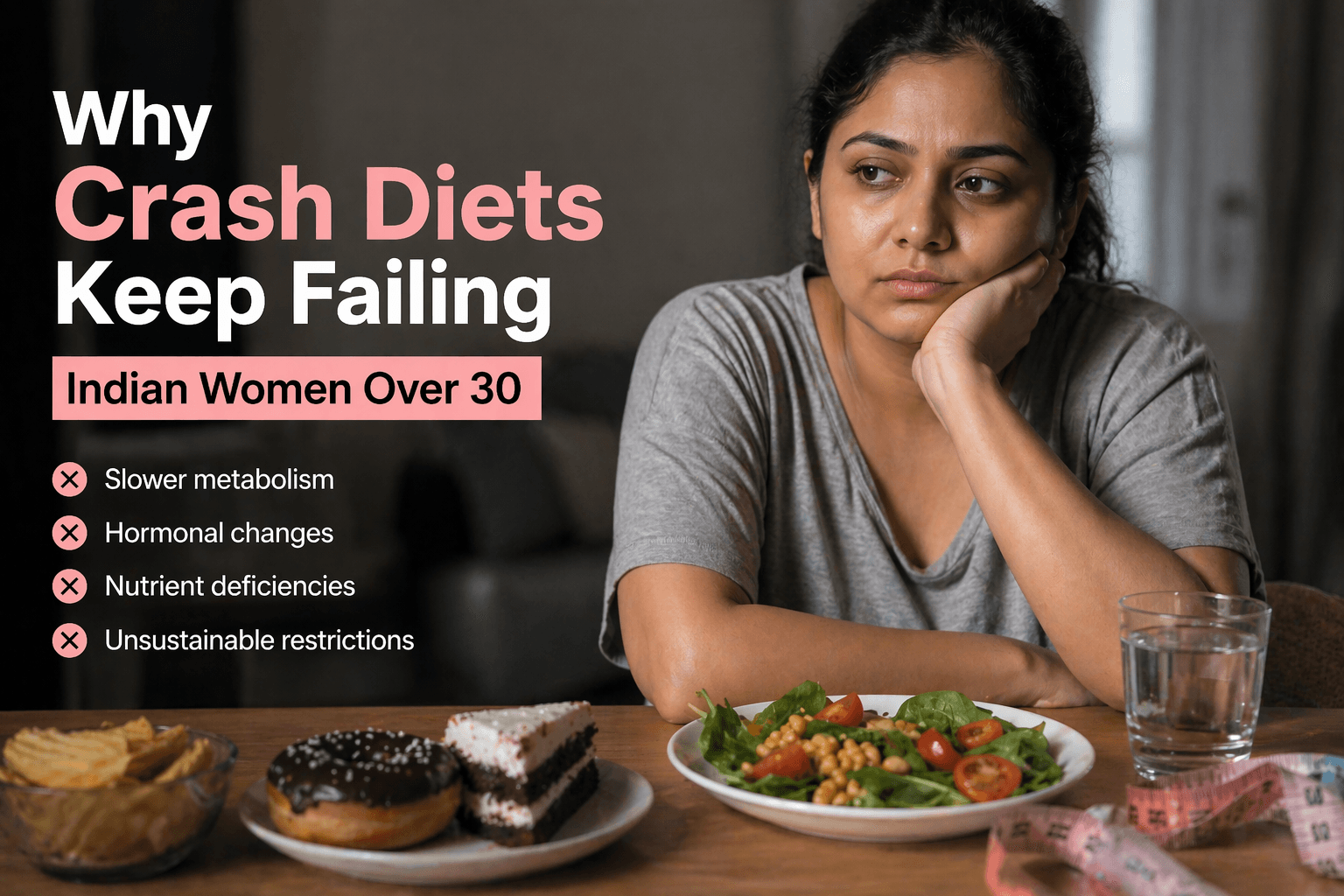
Crash diets promise speed, certainty, and visible change in a very short time. That promise becomes especially tempting for women over 30 who are managing career pressure, family responsibilities, sleep disruption, and shifting hormones. The trouble is that the body at this stage usually responds worse to extremes, not better. What once looked manageable in your early twenties can now create fatigue, mood swings, binge episodes, cycle disruption, or a slower return to normal eating.
One reason crash diets fail is that they strip away flexibility. Indian women over 30 are often balancing home food, work schedules, social meals, travel, and caregiving. Plans built on boiled vegetables, fruit-only meals, or highly restrictive charts may work for three or four disciplined days, but they collapse the moment real life enters. The result is not only physical exhaustion but also the emotional belief that you failed, when the real problem was the design of the diet itself.
Another issue is under-recovery. Poor sleep, higher stress, and hormonal transitions already place extra load on the body. Add severe calorie restriction, low protein, and fear-based food rules, and the system starts protecting itself. Energy drops, exercise feels harder, cravings rise, and food thoughts become louder. This is not a lack of motivation. It is biology responding to deprivation.
Women over 30 also benefit more from muscle-preserving strategies than scale-obsessed ones. If a plan causes rapid weight loss but also reduces strength, worsens recovery, and is impossible to maintain, it has not truly improved health. Sustainable fat loss depends on regular meals, adequate protein, movement, and a routine that can survive weekends, festivals, and busy workdays.
This is why progress often improves when the plan looks less dramatic. A breakfast with protein, a more stable lunch, a structured evening snack, better hydration, walking, and realistic dinners may seem too simple to impress anyone online, but those habits create results that actually stay. They also protect mood, digestion, and consistency in a way that extreme dieting rarely can.
If you are over 30 and tired of restarting, stop asking what the fastest plan is. Ask what kind of plan would still make sense on a stressful Wednesday, during a family function, or in a month when work is intense. The answer to that question is usually the one that works in the long run. Sustainable change is not slower because it is weaker. It is slower because it is real enough to last.
Want to read more client stories?